Introduction
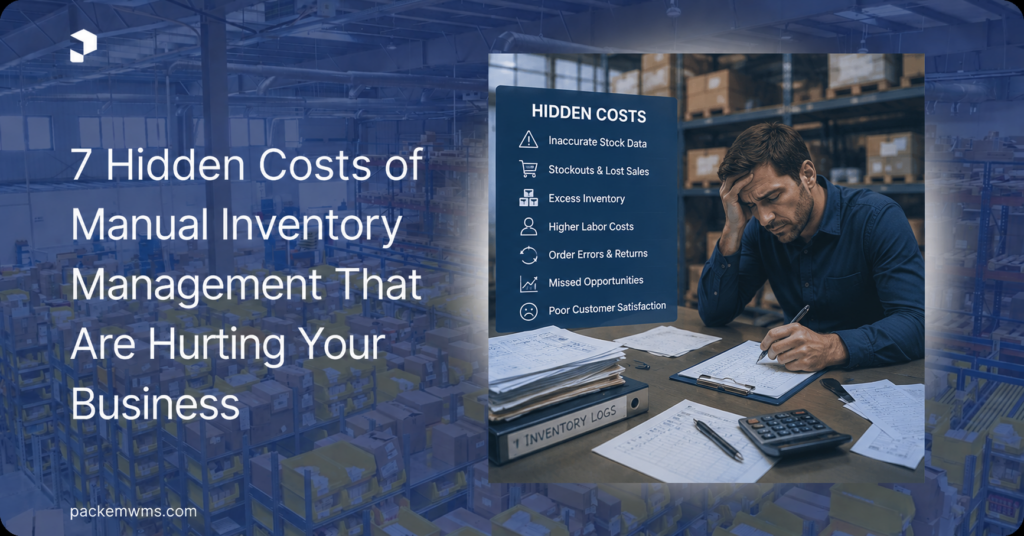
Many businesses still rely on spreadsheets, paper records, and manual processes to manage inventory. While these methods may seem cost-effective initially, they often create hidden expenses that silently reduce profitability and limit growth.
From stock discrepancies and delayed orders to labor inefficiencies and customer dissatisfaction, manual inventory management can cost businesses thousands of dollars every year.
In today’s fast-paced supply chain environment, real-time inventory visibility and warehouse automation have become essential for maintaining operational efficiency and customer satisfaction.
In this article, we’ll uncover the seven hidden costs of manual inventory management and explain how a Warehouse Management System (WMS) can help businesses eliminate these challenges.
What Is Manual Inventory Management?
Manual inventory management refers to tracking stock levels, inventory movements, purchase orders, and shipments using spreadsheets, paper logs, or disconnected software systems.
While this approach may work for small operations, growing businesses often struggle with:
- Inventory inaccuracies
- Human errors
- Lack of visibility
- Delayed order fulfillment
- Increased operational costs
These challenges create hidden expenses that are often overlooked until they begin affecting profitability.
1. Inventory Inaccuracies Lead to Revenue Loss
One of the biggest costs of manual inventory tracking is inaccurate inventory data.
Human errors such as incorrect stock entries, duplicate records, and missed updates can result in:
- Stock shortages
- Overstocking
- Lost sales opportunities
- Excess carrying costs
When inventory records don’t match actual stock levels, businesses risk accepting orders they cannot fulfill or purchasing products they don’t need.
Impact on Business
- Lost revenue from stockouts
- Increased warehouse space costs
- Reduced customer trust
- Poor demand forecasting
A Warehouse Management System provides real-time inventory tracking, ensuring inventory accuracy across all warehouse operations.
2. Increased Labor Costs Due to Manual Processes
Manual inventory management requires employees to spend significant time on repetitive tasks such as:
- Stock counting
- Data entry
- Spreadsheet updates
- Inventory reconciliation
These activities consume valuable labor hours that could be used for higher-value operational tasks.
Hidden Expense
Businesses often underestimate the cost of employee time spent correcting inventory errors and managing outdated processes.
With warehouse automation and barcode scanning technology, organizations can significantly reduce manual workloads and improve workforce productivity.
3. Costly Picking and Shipping Errors
Order fulfillment mistakes are common in warehouses that rely on manual processes.
Employees may:
- Pick incorrect items
- Ship wrong quantities
- Miss products during packing
These errors create additional expenses through:
- Return shipping costs
- Replacement orders
- Customer support efforts
- Refunds
Why It Matters
According to industry research, fulfillment errors can significantly impact customer retention and brand reputation.
Modern warehouse management software helps verify inventory locations, improve picking accuracy, and reduce shipping mistakes.
4. Overstocking and Excess Inventory Carrying Costs
Without accurate inventory visibility, businesses often purchase more stock than necessary.
Excess inventory leads to:
- Increased storage expenses
- Higher insurance costs
- Product obsolescence
- Cash flow constraints
Inventory sitting on warehouse shelves ties up working capital that could otherwise be invested in business growth.
Common Warning Signs
- Slow-moving inventory
- Limited warehouse space
- Frequent stock adjustments
- Declining inventory turnover rates
Real-time inventory management helps businesses maintain optimal stock levels while minimizing carrying costs.
5. Stockouts Result in Lost Customers
Stockouts are among the most damaging consequences of manual inventory management.
When customers place orders for unavailable products, businesses face:
- Lost sales
- Cancelled orders
- Negative reviews
- Reduced customer loyalty
In competitive markets, customers often switch to alternative suppliers after experiencing stock shortages.
The Long-Term Cost
The impact extends beyond a single lost order. Businesses may lose repeat purchases and future revenue opportunities.
Warehouse management software provides inventory alerts and demand forecasting tools that help prevent stockouts before they occur.
6. Lack of Real-Time Visibility Slows Decision-Making
Businesses relying on spreadsheets often lack real-time insight into warehouse operations.
Managers struggle to answer critical questions such as:
- What inventory is currently available?
- Which products are moving fastest?
- Where are operational bottlenecks occurring?
- What stock needs replenishment?
Without accurate data, decision-making becomes reactive instead of proactive.
Business Impact
Poor visibility can lead to:
- Delayed purchasing decisions
- Inefficient warehouse operations
- Reduced customer service levels
- Missed growth opportunities
A Warehouse Management System provides centralized dashboards and real-time reporting for smarter business decisions.
7. Scalability Challenges Restrict Business Growth
Manual inventory management may seem manageable today, but it becomes increasingly difficult as businesses grow.
As order volumes increase, companies often encounter:
- Data management issues
- Operational bottlenecks
- Rising labor requirements
- Increased error rates
Many growing businesses discover that spreadsheets simply cannot support modern supply chain demands.
Growth Limitation
Without scalable inventory management processes, expansion becomes costly and difficult.
Warehouse automation solutions enable businesses to handle larger order volumes while maintaining operational efficiency and accuracy.
How a Warehouse Management System Eliminates These Hidden Costs
A modern Warehouse Management System (WMS) addresses the core challenges associated with manual inventory management.
Key Benefits
Real-Time Inventory Tracking
Gain instant visibility into inventory levels across all warehouse locations.
Improved Inventory Accuracy
Reduce human errors through barcode scanning and automated updates.
Faster Order Fulfillment
Streamline picking, packing, and shipping processes.
Lower Operational Costs
Reduce labor expenses and eliminate unnecessary inventory carrying costs.
Better Business Insights
Access real-time analytics and performance reports.
Scalable Operations
Support business growth without increasing operational complexity.
Why Businesses Are Moving Away from Spreadsheets
The modern supply chain demands speed, accuracy, and visibility.
Businesses that continue relying on manual inventory management often struggle to compete with organizations using warehouse automation and real-time inventory systems.
As customer expectations continue to rise, accurate inventory management has become a competitive advantage rather than a luxury.
Companies investing in warehouse management software gain greater control, improved efficiency, and stronger profitability.
Conclusion
The true cost of manual inventory management goes far beyond spreadsheets and paperwork.
Inventory inaccuracies, labor inefficiencies, fulfillment errors, stockouts, excess inventory, poor visibility, and scalability challenges all contribute to significant hidden expenses.
By implementing a Warehouse Management System, businesses can eliminate these costs, improve operational efficiency, and position themselves for sustainable growth.
Ready to Take Control of Your Warehouse?
PackemWMS helps businesses simplify inventory management, improve warehouse visibility, reduce operational costs, and deliver exceptional customer experiences.
Discover how PackemWMS can transform your warehouse operations today.