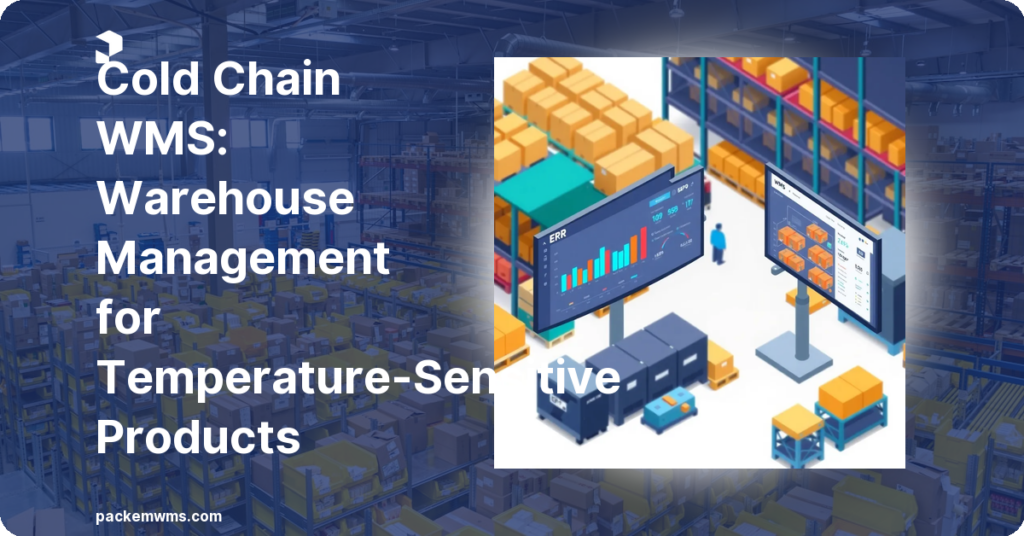
Cold Chain WMS: Warehouse Management for Temperature-Sensitive Products
A cold chain WMS is warehouse management software designed to track temperature-sensitive inventory through every stage of storage and fulfillment — receiving, putaway, picking, and shipping — while enforcing lot-based rotation rules (FIFO/FEFO), monitoring expiration dates, and generating the compliance documentation required for food safety and pharmaceutical regulations. Without a WMS built for cold chain workflows, operators rely on spreadsheets and manual checks that introduce errors, spoilage risk, and audit exposure.
If you’re running a 3PL, food distributor, or warehouse handling perishables, frozen goods, pharma, or nutraceuticals, this guide covers what to look for in a WMS and how the right system keeps your operation compliant and your clients’ inventory moving correctly.
What Makes Cold Chain Warehousing Different
Standard warehouse management handles receiving, putaway, picking, and shipping. Cold chain warehousing adds three layers of complexity that most general-purpose WMS platforms weren’t designed for.
Temperature zones. A single facility may run ambient, refrigerated (34-40F), and frozen (-10 to 0F) zones simultaneously. Inventory must be stored in the correct zone, and transfers between zones need to be tracked as exception events.
Lot-based rotation. Perishable products have expiration dates and lot numbers assigned at manufacturing. Your warehouse must pick the oldest eligible lot first (FIFO) or the lot expiring soonest (FEFO), depending on the product and client requirement. Manual lot picking is error-prone. The wrong lot gets picked, the wrong product ships, and a client complaint or recall follows.
Compliance documentation. FSMA, FDA 21 CFR Part 111, and various state food safety regulations require documented lot traceability. That documentation needs to be immediately retrievable in the event of a recall.
A cold chain WMS enforces all three layers automatically rather than depending on staff to remember the rules.
Lot Tracking: The Core of Cold Chain Compliance
Lot tracking is the operational foundation of cold chain warehousing. When a pallet of frozen fish arrives at your dock, it carries a manufacturer lot number and an expiration date. Your WMS captures both at receiving and ties them to every subsequent movement of that inventory.
PackemWMS captures lot numbers during the inbound receiving scan. The moment a lot is received, the system records the lot number, expiration date, and putaway location. When a pick order is generated, PackemWMS automatically selects inventory according to your rotation rule: FIFO picks the oldest received lot first; FEFO picks the lot expiring soonest. Your pickers scan the lot barcode to confirm they’re pulling the right product. If they scan the wrong lot, the system flags it before the error ships.
The WMS features that enforce rotation rules automatically are what separate compliant operations from those that discover the problem after a client calls about an expired shipment.
FIFO vs FEFO: Which Rotation Rule Do You Need?
FIFO (First In, First Out): Oldest received inventory ships first. Standard for most perishable goods where lot age correlates with remaining shelf life.
FEFO (First Expired, First Out): Inventory with the soonest expiration date ships first, regardless of when it was received. Required when different lots of the same SKU have different expiration dates — common in pharma and specialty food products.
PackemWMS supports both FIFO and FEFO and enforces them at the picking scan level — meaning pickers can’t accidentally skip a lot without the system catching it. For food 3PLs managing multiple clients with different compliance requirements, this configurability is not optional.
Expiration Date Management: Before the Problem Ships
A cold chain WMS with expiration date management catches the problem before picking begins. PackemWMS generates alerts when inventory is approaching expiration — configurable at 30, 60, or 90 days — so your team can flag those lots for priority fulfillment or client notification before they become a problem. When a lot hits its expiration date, the system blocks it from being picked automatically.
According to the FDA, temperature abuse and poor lot management are the top two causes of food safety incidents in cold chain warehousing. Expiration date alerts and automatic lot blocks eliminate both failure modes.
Compliance Reporting and Lot Traceability
When a recall happens, your response time is measured in hours. The FDA requires that food facilities trace product one step forward and one step back within 24 hours under FSMA 204 rules. Most warehouses using spreadsheets can’t produce that documentation in 24 hours.
A cold chain WMS generates lot traceability reports on demand. You search by lot number and get a complete chain of custody: which receiving event captured it, which putaway location it went to, which pick orders consumed it, which shipping events moved it, and which client received it.
The food manufacturing WMS capabilities in PackemWMS include full lot traceability reporting that meets FSMA documentation requirements.
What to Look for in a Cold Chain WMS
When evaluating platforms, ask specifically about: lot capture at receiving (scan-based vs manual), FIFO/FEFO enforcement at the scan level, expiration alerts before lots expire, lot traceability reporting in under 5 minutes, and multi-client lot isolation per SKU.
Cold Chain WMS for Small 3PLs
Enterprise cold chain WMS platforms run $50,000 to $250,000+ per year and require 6 to 18-month implementations. PackemWMS delivers cold chain-ready lot tracking, FIFO/FEFO enforcement, expiration date management, and compliance reporting at $750 to $1,800 per month with a 2 to 5 week implementation.
Contact our team to see how the cold chain configuration works for your specific product types and client requirements.
Frequently Asked Questions
What is a cold chain WMS?
A cold chain WMS is warehouse management software that tracks temperature-sensitive inventory through receiving, storage, picking, and shipping while enforcing lot rotation rules (FIFO/FEFO), monitoring expiration dates, and generating compliance documentation required by food safety and pharmaceutical regulations.
What is FEFO in warehouse management?
FEFO stands for First Expired, First Out — a lot rotation rule that picks inventory with the soonest expiration date first, regardless of when it was received. Used for perishable products where different lots of the same SKU may have different expiration dates.
Does PackemWMS support cold chain warehousing?
Yes. PackemWMS supports lot and serial number tracking, FIFO and FEFO rotation enforcement, expiration date alerts, and lot traceability reporting — the core features required for cold chain compliance.
How does lot tracking help with food safety compliance?
Lot tracking creates a documented chain of custody from receiving through shipping for every lot number. In the event of a recall or FDA audit, you can produce a complete trace within minutes instead of days.